

The Ground Worth Fighting For: Key Terrain in Military and Business Strategy.

This past December (2025) I had the opportunity to attend Thayer Leadership, thanks to one of my clients, Integra-Cast, a member of the Spartan Aerospace Group, and its CEO, John Buckridge. I am very thankful for being given the experience.

It was an awesome training course and one I would highly recommend to anybody (or any organization) that wants to build or improve their leadership skills. My main personal objective was to benchmark my leadership style and skills, home-grown over 40 years of running my consultancy XONITEK, against what is arguably the best. I was pleasantly surprised to discover that my leadership style and skills were very closely aligned to that which was being taught; but learning new skills and sharpening existing ones is always welcome.
Some of the real benefits were to contextualize the way I lead and tie it back to the best practices and stories of others that demonstrated their use. It gave me a better understanding of why I do what I do, how it came to be, and why it is so effective. And of course, I did learn several other techniques that will prove invaluable as I incorporate them into mine.
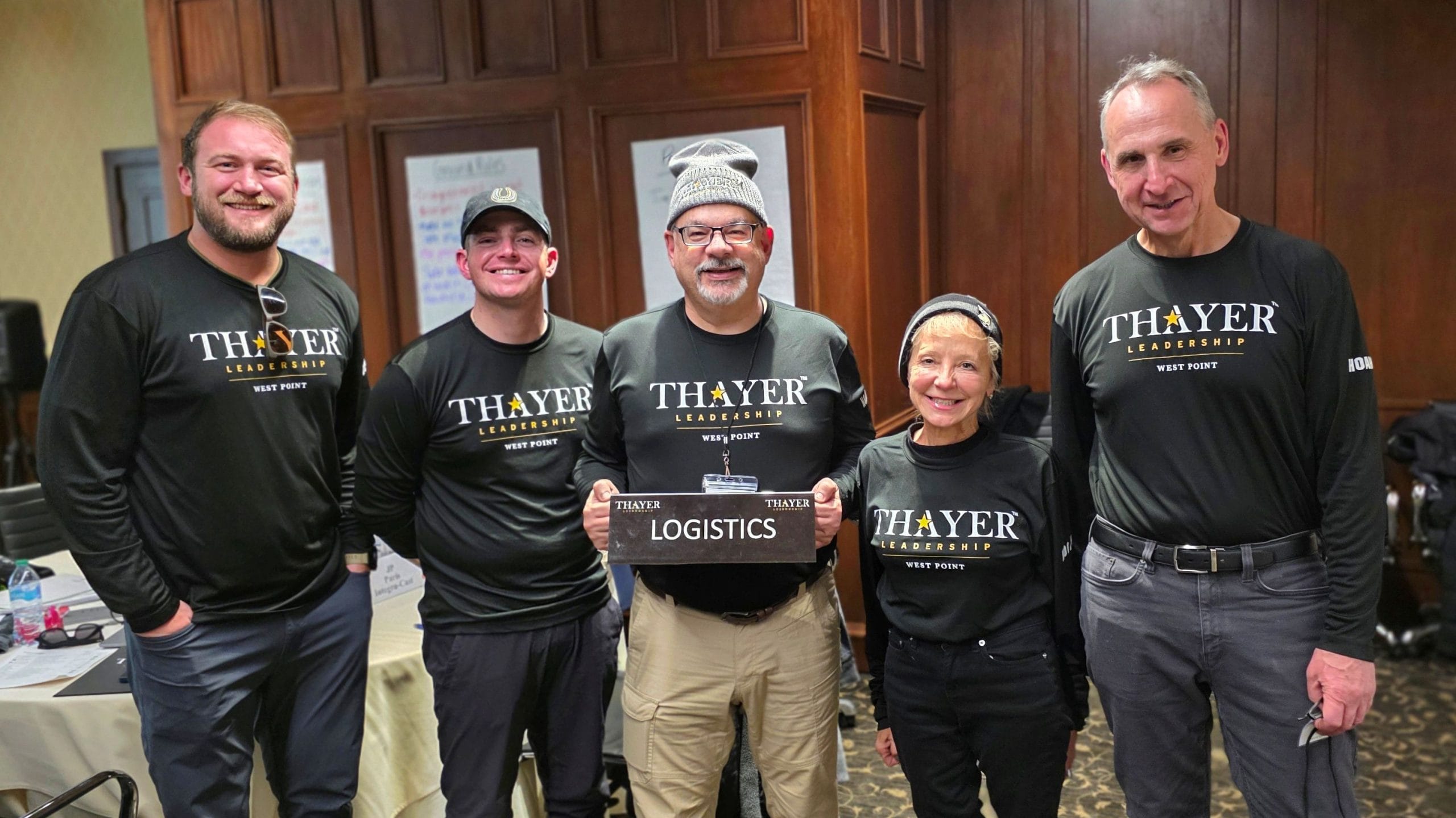
But one of the more impactful experiences was a historical tour of West Point given by Pilar McDermott, and in particular the notion of “Key-Terrain”. You see, West Point is strategically located on the Hudson River at a point where the river bends sharply twice (z-shaped), is quite narrow, and where the currents are stronger and less predictable. Pilar noted that this was “Key Terrain” for West Point and the Revolutionary Army; with Key Terrain being any locality or area whose seizure, retention, or control affords a “marked advantage” to either combatant. Read that again; because every word matters.
Holding this point prohibited the British from sailing past, taking Albany, and linking up with British forces coming from the north. Had the British been able to link-up, it would have effectively cut the colonies in half and increase the likelihood of a British victory in the war.
Why it resonated with me: It made me re-realize what my Key Terrain is, and that is the discipline of Operational Excellence. It is a discipline that took me most of my 40 years in business to own; and that by constant learning, continuing hard work, pushing beyond what is known, and amassing experiences (my own and those of my colleagues and peers). And I have written hundreds of articles on the subject, have one book (“State of Readiness”) and I have another book in the works.

I started building my ecosystem over 20 years ago in earnest and, today, it is the single largest in existence on the discipline of Operational Excellence consisting of; almost 20,000 LinkedIn connections, almost 180,000 members of my Operational Excellence LinkedIn Group, 18,000 subscribers to my “Operational Excellence by Design” eNewsletter, and several other platforms.
And the reason I took note is because it is easy to become complacent. There is a lot of truth to the notion that it is easier to get to the top than it is to stay there. I must always remember to keep doing what I have done in the past to get where I am.
What Key Terrain Actually Means in Military Strategy
How does all of this relate to you? Personally? Professionally? For your business?
There is a saying which I often use when advising executives on competitive strategy: “Not all ground is worth fighting for, but some ground is worth dying for.” The military understands this principle intimately. What surprises me is how few business leaders understand that the same principle applies to their competitive landscape.
Let me start by just laying it out there: Most organizations are fighting on the wrong ground. They are expending resources, talent, and time defending positions that do not matter while neglecting territory that could make or break their future. They do this because they have never learned to identify what is truly key to their survival and success.
The military figured this out centuries ago. Most businesses (and individuals) are still learning.
Seizure means taking it when you do not have it. Retention means holding it when you do. Control means denying it to your enemy even if you cannot fully occupy it. And marked advantage means the difference between winning and losing, not just incremental improvement.
The classic example is high ground. If you control the hill, you can see the enemy’s movements, your artillery has greater range, and your defensive position is inherently stronger. Your opponent must attack uphill, which costs them blood, time, and momentum. That is key terrain.
But here is the thing: not all high ground is key terrain. A hill in the middle of nowhere that does not overlook anything important and is not on the route to anywhere critical is just a hill. It might be tactically useful, but it is not strategically vital. The difference is context.
During the Battle of Gettysburg, Little Round Top was key terrain. It anchored the Union left flank and overlooked the entire battlefield. If the Confederates had taken it, they could have enfiladed the Union line and likely won the battle. Colonel Joshua Chamberlain understood this, which is why the 20th Maine fought to the last round and then fixed bayonets rather than give up that ground.
The cemetery ridge, by contrast, was important but not as critical as Little Round Top. The difference was geometric: one location multiplied advantages, the other was simply defensible.
J.Paris: I was working with a manufacturing company in 2018 that was fighting a price war with three competitors. They were burning through $2.3 million annually in discounts to match competitor pricing across their entire product line. When we mapped their competitive terrain, we discovered that 11 products (less than 4 percent of their SKUs) generated 63 percent of their profit margin and had the longest customer retention rates. Those 11 products were their key terrain. We stopped discounting on those completely and actually raised prices by 8 percent. We lost some customers on those products, but the ones who stayed were the ones we wanted. Two competitors went bankrupt trying to match our discount on commodity products. We never should have been fighting there in the first place.
What Key Terrain Means in Business
In business, key terrain is any market position, capability, relationship, or asset whose control provides a marked competitive advantage that is difficult for competitors to neutralize or replicate.
Notice I did not say “difficult to copy.” I said it is difficult to neutralize or replicate. There is a difference. Your competitor might be able to copy your product, but if you control the distribution channel, the relationship with the specifier, or the regulatory approval process, the copy does not matter. You are on the high ground.
Key terrain in business can take several forms:
- Customer Relationships That Control Access: If you are the approved vendor for a Fortune 500 company and that approval took 3 years of compliance audits, safety certifications, and relationship building, that’s key terrain. Your competitor can’t just show up with a better price.
- Proprietary Processes or IP That Create Cost Advantages: If you have figured out how to manufacture something at 40 percent lower cost than industry standard, and it took you 7 years and $15 million in R&D to get there, that’s key terrain. Patents expire, but know-how compounds.
- Platforms That Generate Network Effects: If your value increases with each new user, and you have reached critical mass, that’s key terrain. Your competitor might build a better mousetrap, but if nobody else is using their mousetrap, it doesn’t matter.
- Talent Concentrations That Are Irreplaceable: If you have assembled a team with specialized knowledge that takes 10 years to develop, and they work well together, that’s key terrain. Your competitor can hire away one person, but they can’t hire away the collective wisdom.
- Regulatory Approvals That Take Years to Obtain: If you are one of three companies with FDA approval to manufacture a specific medical device, that’s key terrain. Your competitor might have the technical capability, but they’re 5 years and $50 million away from being able to compete.
The key (pun intended) is that controlling this terrain provides marked advantage. Not marginal advantage. Marked. Measurable. Meaningful.
Why Key Terrain Matters: The Strategy Execution Gap
Here is what I have learned in 40 years of working with organizations across industries: most companies do not fail because they have bad strategies. They fail because they do not execute their strategy, and they do not execute their strategy because they are fighting on grounds that does not matter.
Think about it. You have limited resources. Limited talent. Limited time. Limited budget. If you are defending or attacking positions that do not provide marked advantage, you are losing by default because your competitor who does understand key terrain is concentrating force where it counts.
This is the strategy execution gap in its purest form. Your strategy might say “focus on high-value customers,” but your sales team is still chasing every RFP that comes through the door. Your strategy might say “differentiate on service,” but you are competing on price in markets where customers do not value service. You are fighting everywhere, which means you are strong nowhere.
The military figured this out through blood. Business figures it out through bankruptcy.
J.Paris: I was brought in to consult with a technology company that was “pursuing growth opportunities” in 14 different market segments. Their revenue was $180 million, which sounds impressive until you realize they had negative margins in 9 of those segments, break-even in 3, and real profit in only 2. They were spread so thin that they could not dominate anything.
We did a brutal key terrain analysis; and I mean brutal. The CEO had to admit that 12 years of “diversification” had been wasted motion. The company exited 10 segments over 18 months, stopped bidding on government contracts entirely, and doubled down on the 2 segments where we had genuine advantage. Revenue dropped to $110 million in year one. Profit tripled. By year three, revenue was back to $190 million, but now with sustainable margins and defensive positions in markets we actually controlled.
How to Identify Your Key Terrain
Identifying key terrain is not about gut feeling or strategic wishful thinking. It is about rigorous analysis across several dimensions. Here is the framework I use:
Question 1: Does Controlling This Position Provide Marked Advantage?
Not “some advantage.” Not “competitive advantage” in the abstract sense. Marked advantage that you can quantify.
Ask yourself:
- If we control this and our competitor doesn’t, what specifically improves by what measurable amount?
- If we lose control of this, what specifically degrades by what measurable amount?
- Is the advantage persistent or temporary?
If you cannot answer these questions with numbers, you are guessing.
J.Paris: I use a simple test. If losing control of this position would reduce the operating margin by less than 5 percentage points within 12 months, it is not key terrain. It might be important terrain, but it is not key. Key terrain, by definition, is ground where losing it significantly changes the outcome.
Question 2: Is It Defensible or Controllable Over Time?
Key terrain that you cannot hold is not key terrain; it is a death trap. The military learned this the hard way. Taking a position you cannot reinforce or resupply just gets your people killed.
In business, this means asking:
- Can we defend this position with our current resources and capabilities?
- What would it take for a competitor to dislodge us, and is that realistic?
- Are there natural barriers to entry or imitation?
- Does controlling this position make us stronger or weaker over time?
Network effects make you stronger over time. Price-based positions make you weaker. Patents expire. Relationships compound. Know the difference.
Question 3: Is It On The Critical Path to Strategic Objectives?
This is where most organizations screw up. They identify defensible positions that provide advantages, but those positions do not actually connect to where the organization needs to go.
It is like controlling a bridge that leads nowhere. Tactically sound. Strategically irrelevant.
You need to map your strategic objectives and then work backward. If your objective is to be the dominant player in autonomous vehicle sensor systems by 2030, then key terrain might be relationships with the 6 major automotive OEMs, patents in LIDAR processing, or talent in machine learning for real-time object recognition.
If your objective is to triple revenue in healthcare IT, but you are fighting to defend market share in legacy systems that hospitals are phasing out, you are on the wrong ground.
Question 4: Can You Actually Win There?
This is the hardest question because it requires brutal honesty about your own capabilities.
Some terrain is key, but you are not equipped to fight for it. Your competitor is already entrenched, they have deeper resources, better talent, or structural advantages you cannot overcome. Recognizing this is not defeatism, it is good strategy.
The alternative is bleeding out in a fight you cannot win while neglecting terrain where you could dominate.
J.Paris: I worked with a mid-sized industrial distributor who wanted to compete with Grainger for large national accounts. That was key terrain in the industrial distribution market, no question. But Grainger had 400 branches, $14 billion in revenue, and 30 years of relationship history with those accounts. My client had 12 locations and $220 million in revenue. They could not win there, period. But they were spending 40 percent of their sales resources trying. We redirected them to regional specialty markets where responsiveness and technical expertise mattered more than footprint. They could dominate there. Within 24 months, they had 75 percent market share in three specialized niches and margins that Grainger could not touch.
How to Protect and Fortify Your Key Terrain
Once you have identified key terrain, you must defend it. This requires a different mindset than offense.
Fortification Requires Ongoing Investment
In the military, you do not just take the hill and walk away. You dig in. You establish fields of fire. You build obstacles. You position reserves. You plan counterattacks.
In business, this means continuous investment in whatever provides your advantage:
- If it is customer relationships, you invest in account management, customer success programs, and relationship depth. You do not hand those accounts to junior salespeople.
- If it is proprietary processes, you invest in process improvement, documentation, and cross-training so the knowledge does not live in one person’s head.
- If it is talent, you invest in retention, development, and succession planning. You pay what it takes. You create environments where people do not want to leave.
- If it is regulatory approval, you invest in compliance infrastructure and regulatory relationships that make renewals automatic.
The mistake most organizations make is treating key terrain as “handled” once they have secured it. Then they starve it of resources and wonder why they lose it.
J.Paris: I watched a software company lose key terrain because they got complacent. They had the dominant position in workflow automation for a specific industry vertical; 78 percent market share built over 15 years. Then they stopped innovating on that product because “it was mature.” They redirected their best developers to new products in different markets. Within 3 years, a venture-backed startup had eaten away 35 percent of their market share by offering modern interfaces and cloud deployment. By the time they tried to respond, they had lost the talent who understood the domain and the customer relationships that took 15 years to build. The key terrain was still key, but they had abandoned the fortifications.
Creating Barriers to Entry and Switching Costs
The best defense is making it expensive, time-consuming, or risky for your customer to leave or for a competitor to attack.
This is not about being anticompetitive or unethical. It is about creating legitimate value that makes switching irrational:
- Deep integration into customer workflows so your solution becomes infrastructure.
- Long-term contracts with performance guarantees that actually deliver value.
- Training and certification programs that create expertise in your products.
- Data accumulation that makes your service better over time.
- Ecosystem development that creates dependencies.
The military calls this “defense in depth.” You do not just defend the position; you make the approaches to the position so costly that rational opponents do not try.
Maintain Intelligence and Early Warning Systems
You need to know when your key terrain is under attack, and you need to know before it is obvious to everyone.
This means:
- Monitoring competitor moves in your key markets.
- Tracking customer satisfaction and relationship health metrics obsessively.
- Watching for regulatory changes that could undermine your advantages.
- Maintaining relationships with industry analysts and thought leaders who see trends before they hit mainstream.
- Creating internal feedback loops so your front-line people can report threats.
J.Paris: Set up a quarterly Key Terrain Review. It is 2 hours with your executive team where you systematically evaluate the health of your key terrain positions. I use a simple red-yellow-green scoring system across five dimensions: competitive strength, customer satisfaction, talent stability, capability advancement, and economic value. If anything goes yellow, you investigate. If anything goes red, you mobilize resources immediately. This is not strategic planning theater. This is operational discipline.
What It Takes: Resources, Talent, Time, and Budget
Protecting and exploiting key terrain is not free. Let me be specific about what it takes:
Budget: 60-70 Percent of Discretionary Investment
If you have correctly identified your key terrain, 60 to 70 percent of your discretionary investment should go toward fortifying, expanding, or exploiting it. Not evenly distributed across all your initiatives. Concentrated.
This feels wrong to most executives because it means saying no to a lot of seemingly good opportunities. But dispersion is the enemy of dominance. The military concentrates force at the decisive point. You should too.
J.Paris: I have seen this play out dozens of times. Companies that concentrate resources on key terrain grow faster and more profitably than companies that “keep their options open.” In one case, a B2B services company shifted 65 percent of their innovation budget to their highest-margin service line; the one where they had unassailable expertise and customer lock-in. They stopped funding five other “growth initiatives” that were really just hopeful experiments. Over 3 years, revenue from that service line grew 240 percent, margins expanded from 24 percent to 38 percent, and customer retention hit 97 percent. The other initiatives? They would have generated marginal returns at best and probably would have diluted focus enough to put the core business at risk.
Talent: Your Best People on Your Most Important Ground
This sounds obvious, but most organizations do the opposite. They put their best people on new initiatives—the shiny objects—and leave key terrain defended by adequate performers.
That is backward.
Your key terrain is where you need your absolute best talent because that is where the competition is fiercest and the consequences of failure are highest. New initiatives, by definition, are experiments. They should be run by solid people with entrepreneurial mindset, but they do not deserve your top 10 percent unless they are on the critical path to new key terrain.
J.Paris: When I evaluating operations, I have a rule: the best plant manager runs the highest-volume plant, period. Not the newest plant, not the most troubled plant, not the pet project. The highest volume plant, where 40 percent of revenue flowed through. Some people think this is wasting talent on “routine” operations. Those people do not understand warfare. You put your best Generals where losing costs you the war.
Time: Patience to Build and Defend Properly
Key terrain battles are measured in years, not quarters. If you are optimizing for quarterly earnings, you will lose key terrain to someone with a longer time horizon.
Building defensible positions takes time:
- Customer relationships that create switching costs: 3 to 5 years
- Proprietary processes that generate cost advantages: 5 to 10 years
- Network effects that create winner-take-all dynamics: 7 to 12 years
- Talent concentrations that are irreplaceable: 8 to 15 years
Your competitor cannot compress these timelines with money alone. You cannot either. The advantage goes to whoever starts first and sustains longest.
Commitment: The Willingness to Say No
This is the hardest resource requirement. Protecting key terrain means saying no to:
- Opportunities outside your key terrain that look attractive.
- Customers who want you to compete on ground that does not favor you.
- Competitors who are trying to pull you into fights that do not matter.
- Investors or board members who want you to “diversify.”
- Internal advocates for pet projects that do not defend or expand key terrain.
Every yes to something off your key terrain is a no to fortifying what matters.
Bring It All Together: Key Terrain Defines Winners
Let me bring this back to where we started. Not all ground is worth fighting for, but some ground is worth dying for.
The organizations that win over the long term are the ones that correctly identify their key terrain and defend it ruthlessly while refusing to be pulled into battles that do not matter. This requires discipline that most organizations do not have.
It requires the ability to look at your business and admit that most of what you are doing does not provide marked advantage. It requires the courage to exit markets, fire customers, kill products, and reallocate resources in ways that make people uncomfortable. It requires patience to build positions that take years to fortify while competitors are showing quarterly gains in markets you have chosen to abandon.
But here is what I have learned: the companies that get this right do not just survive, they dominate. They grow faster and more profitably than their competitors because they are not wasting resources fighting everywhere. They attract and retain better talent because people want to be part of winning efforts, not spread-thin mediocrity. They command premium pricing because they control positions of genuine advantage.
The companies that do not get this right bleed slowly. They are always fighting, always busy, always exhausted, but never actually winning. They mistake activity for progress and market share for strategic position.
J.Paris: Over 40 years, I have seen exactly three kinds of companies survive major market disruptions. First, companies that owned key terrain and defended it successfully. Second, companies that recognized their terrain was no longer key and successfully migrated to new terrain before it was too late. Third, companies that got lucky. The thumbnail ratio is roughly 40:30:30, and the luck-based survivors rarely make it through the next disruption. Your odds are better if you understand key terrain.
The Bottom Line
Key terrain in business, like key terrain in military strategy, is about making choices. You cannot be strong everywhere, so you must choose where you are going to be dominant. You cannot defend everything, so you must choose what you are going to fortify. You cannot attack on every front, so you must choose where you are going to mass your forces.
The military has 2,000 years of evidence proving this works. Business has maybe 50 years of evidence, but it is pointing the same direction.
Identify your key terrain. Invest in it disproportionately. Defend it ruthlessly. Refuse to be pulled onto ground that does not matter.
Do this consistently, and you will not just survive, you will seize the high ground while your competitors bleed out fighting over irrelevant territory.
That is how you build a high-performance organization. That is how you execute strategy instead of just planning it. That is how you win.
“In war, the way is to avoid what is strong and strike at what is weak.”
—Sun Tzu, The Art of War
About the Author

Paris is an international expert in the field of Operational Excellence, organizational design, strategy design and deployment, and helping companies become high-performance organizations. His vehicles for change include being the Founder of; the XONITEK Group of Companies; the Operational Excellence Society; and the Readiness Institute.
He is a sought-after speaker and lecturer and his book, “State of Readiness” has been endorsed by senior leaders at some of the most respected companies in the world.
Click here to learn more about Joseph Paris or connect with him on Linkedin.


