The Operational Excellence Society is a “think tank” that creates and aggregates content for individuals who wish to be high-performance members of high-performance teams at high-performance organizations.
What is Operational Excellence?
We define Operational Excellence as; “a state of readiness that is attained as the efforts throughout the organization reach a state of alignment for achieving its strategies; and where the corporate culture is committed to the continuous and deliberate improvement of company performance AND the circumstances of those who work there – and is precursor to becoming a high-performance organization.“

STOP TEACHING TO THE TEST
Why AI Should Finally Finish the Argument the Calculator Started Somewhere in the mid-1970s, a math teacher stood in front of a classroom and banned the calculator. “You will not always have one of these with you,” she said, tapping the little plastic box like it was contraband. She was wrong. Not eventually wrong — immediately, structurally, permanently wrong. Forty years later, everyone in that classroom carries a calculator, a spreadsheet, a search engine, and a research assistant in their pocket at all times. It is called a phone. We didn’t just get the calculator back. We got Wolfram Alpha,…
Founders Desk Archive




featured articles

Best Practices For Becoming a High-Performance Organization
I started XONITEK in August of 1985 in Endicott, New York. I still own its latest incarnation, now located in Sheridan, Wyoming. Having owned my own businesses for the last…
Build Organizational Capacity and Capability – For Free
I was coaching one of the national oil companies in the Middle East, offering mentorship to the director of their operational excellence program. He was frustrated because he had invested…

You Are Unique, but Not Special
In my article, “Build Organizational Capacity and Capability – For Free”, I listed several root-causes for training and education programs reaching a “stall speed” and a detailed approach for avoiding…

Design Thinking for Operational Excellence
I was the Chairman at an Operational Excellence and Business Transformation conference in Amsterdam this past March (2023) which was produced by CParity. The lead-off workshop was on Design Thinking…

Considering the Entire Employee Lifecycle
I wrote an article entitled “The Strategic HR Department” where I shared my thoughts on the characteristics of a Human Resources Department that is strategic with a purpose of being…

Eulogy of a Continuous Improvement Program
When you were born, everyone could see the twinkle in your eyes for the fire and passion you held. As you grew, you became inspired by the reported accomplishments of…
Expert Contributors

Biannual Supply Chain Report: Five Trends Shaping the Economic Landscape
From disruption to continual risk. After several years of disruptions, US supply chains are entering a new phase in which they are no longer fixed but expected to be in constant motion. Firms are operating in an environment where trade policy,…

Action items for AI decision makers in 2026
Expect a level-set year and a sharper focus on enterprise value. Artificial intelligence has dominated economic and business attention for the past several years. But the hype cycle is slowing…

The Best Manufacturers Build AI with Workers, Not for Them
Summary. Manufacturers are pushing ahead with AI, but workers often feel unprepared, uncertain, and distrustful. Research shows a clear gap between executive optimism and frontline experience, driven by unclear roles, weak…
Why We Love to Hate HR… and What HR Can Do About It
Five smart moves that will help, by Peter Cappelli Summary. Complaints against Human Resources (HR), which are nothing new, have a cyclical quality. They’re driven largely by the business context. When…

Applying Lean Six Sigma Methods to Litigation Practice
A growing number of law departments and law firms are exploring Lean Six Sigma and similar methodologies to continuously improve the way they deliver legal services. By tailoring these techniques…
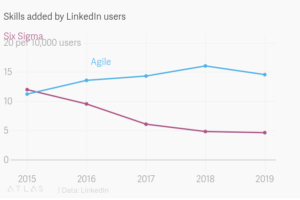
Whatever happened to Six Sigma?
GE adopted Six Sigma from Motorola in 1995, and under Jack Welch it became corporate religion. But as GE began a long, slow decline, so did the popularity of Six…
Like what you’re reading?
THOUGHT FOOD


the opex vault

Entrepreneurs in Japan: Time to get started
The mood among Japan’s would-be business moguls is at its most buoyant since the “dotcom bubble” burst a decade ago. According to one man called Takafumi Horie who’s involved in no…

What a Stronger Chinese Yuan means for the U.S.
It has been broadly accepted that the Chinese Yuan is undervalued. However, what remains to be established is how fast the yuan should appreciate in value. One way or another,…
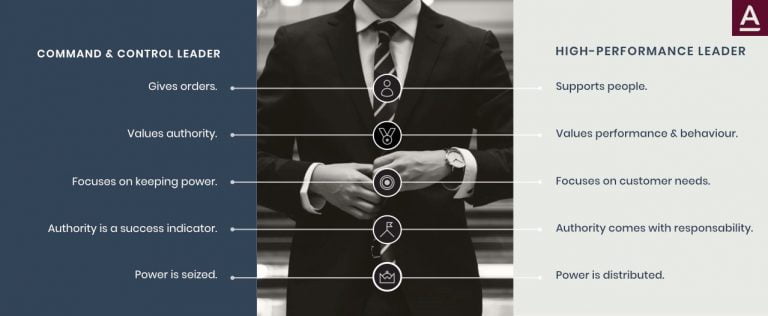
The Power of Leadership at High Performance Organizations
The power of leadership at High-Performance Organizations is found in the essence of Servant Leadership, the alternative approach to the “default” model most common in society until now: The Command…

The Anti-CEO Playbook
Profit, money, shareholders: these are the priorities of most companies today. But at what cost? In an appeal to corporate leaders worldwide, Chobani founder Hamdi Ulukaya calls for an end…