

On building a plane while flying it

“Building a plane while flying it” or some variation has been used to describe situations in education (2011), education (2016). education (2017), health care, medicine, ride-hailing startups, business strategy, even fluffier business stories, and…this. And long before earning broad criticism for its use in tech, the phrase was vividly illustrated in an ad for Electronic Data Systems (EDS) that has since been appropriated for all the circumstances named above, as well as building churches:

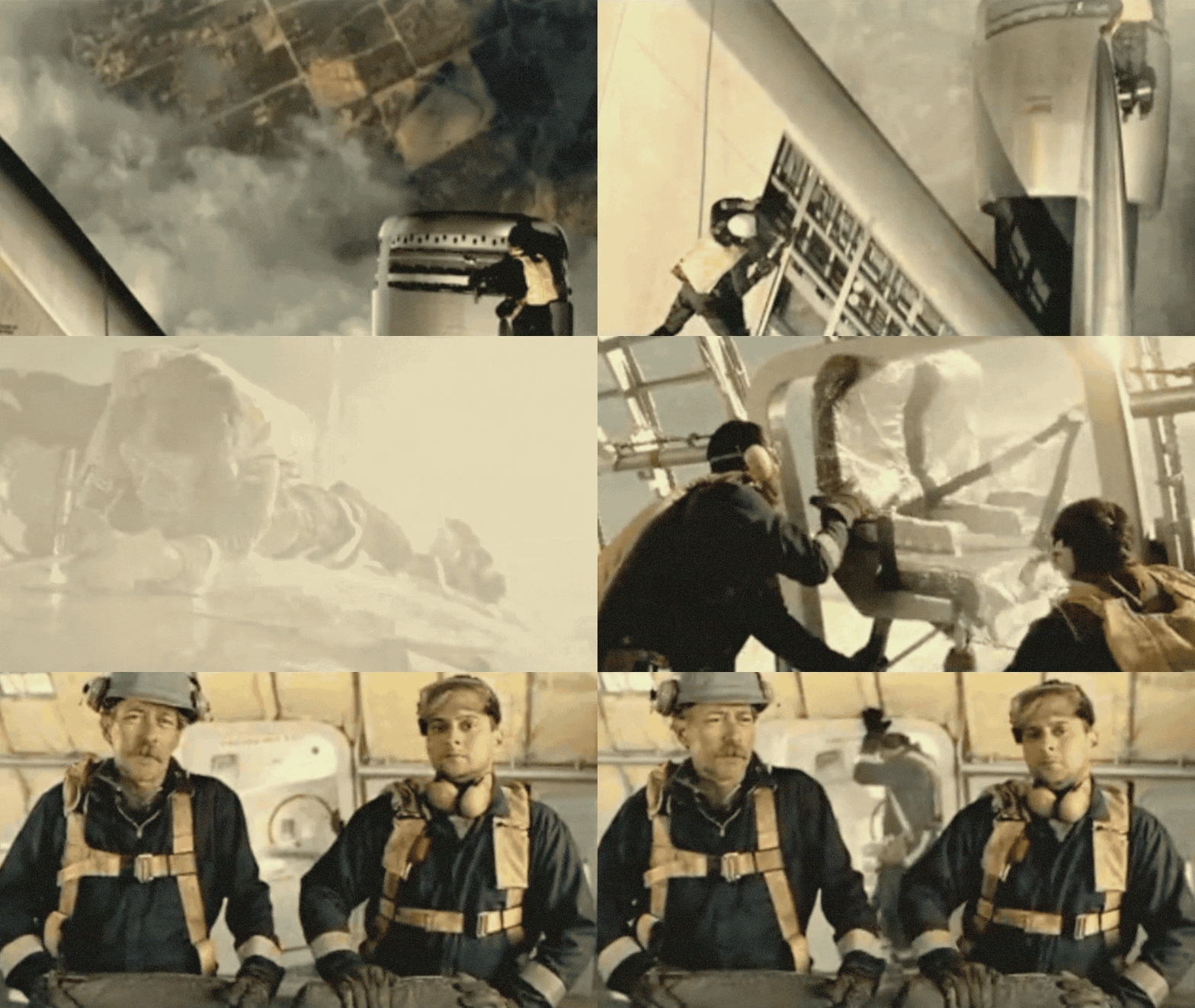
By now, we recognize the phrase has been overused and misused to the point that it has no meaning, but as the critics like to point out: the metaphor is often wrong. And it’s simple BS when talking about iterating software running as a service, where change is expected and necessary. It’s what we do, but more on that later.
Also, as improbable as it might seem to some, there’s a lot of precedent for mid-flight repairs and revisions in aviation. I’m not just talking about sci-fi situations, like R2-D2 repairing Queen Amidala’s royal starship, BB-8 repairing the weapons system in Poe’s X-Wing in Last Jedi, or any of the numerous times Montgomery Scott rebuilt, modified, or supercharged the Enterprise’s systems in-flight and mid-episode (though some people think he’s a good model for project managers).
And I’m also not going to focus on the five separate servicing missions to the Hubble while orbiting at about 18,000 miles per hour, about 340 miles above the earth’s surface. Even though those altitude and speed numbers hide the complexity that the HST’s orbit is unpredictable:
The position along its orbit changes over time in a way that is not accurately predictable. The density of the upper atmosphere varies according to many factors, and this means that Hubble’s predicted position for six weeks’ time could be in error by up to 4,000 km (2,500 mi). Observation schedules are typically finalized only a few days in advance, as a longer lead time would mean there was a chance that the target would be unobservable by the time it was due to be observed.
Nor do I intend to spend much time on lighter-than-air craft and the nautical ships that preceded them. Somebody had to build the coffin that Ishmael survived the Pequod’s sinking in, and Alfred Eisenstaedt’s photo of in-flight repairs of the Graf Zeppelin is truly epic. Maritime and Zeppelin crews both prepared for and often executed mid-course repairs, but like any fish tale, this coverage of a rudder repair certainly played up the drama.
And though I could probably mic-drop this post with the following video of people changing the tires on a moving car, I’m going to follow it with true stories about winged aircraft: