

Enfoque de sistemas: Teoría para Resolver Problemas de Inventiva (TRIZ) (Spanish Edition)
En este libro se describe un enfoque sistémico. Se abordan definiciones básicas como: pensamiento sistémico, teoría de sistemas, análisis y síntesis del sistema. El concepto de sistemas y sus componentes se analizan como una to-talidad integral, una propiedad y una posición, también como un sistema técni-co y antropogénico. Además, se caracterizan las funciones, procesos, flujos y jerarquías del sistema.
Se presenta el concepto de consistencia y requerimientos del sistema, mientras que el operador del sistema se describe tomando en cuenta cualquier cambio y sus efectos en el sistema.
Posteriormente el contenido se centra en el análisis y síntesis de sistemas, así como en el enfoque de sistemas para el diseño.
El análisis sistémico se usa para no dejar lagunas en la siguiente secuen-cia: análisis de componentes, análisis estructural, análisis funcional y análisis de diagnóstico.


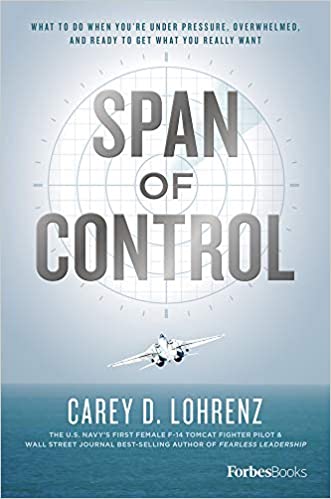
Span Of Control
What can you control?
What do you do when you’re under pressure, overwhelmed, and ready to get what you really want? As one of the first female F-14 Tomcat fighter pilots in the US Navy, as well as a mom, wife, business consultant, Wall Street Journal bestselling author, and global speaker, author Carey Lohrenz knows that the stress we experience can be just as intense as the stress in the cockpit of a fighter jet going Mach 2. But she’s got a secret weapon to prevail: years of training to overcome the specific natures of uncertainty, stress, burnout, anxiety, and pressure.
At our core, we know we’ve lost control. We’ve lost our grip on what we really want and who we really want to be. In order to solve the challenges of chaos and make our goals, dreams, and commitments a reality, we have to understand that in order to succeed when the pressure is on and to improve our performance overall, we’ve got to know what we can and cannot control.
In Span of Control, Lohrenz walks us through the fundamentals of surviving and succeeding during times of crisis. Weaving together eye-opening science, gripping personal stories, insightful interviews, prescriptive advice, and a high-octane dose of encouragement and practicality, Span of Control helps leaders recognize how to focus on what matters most, formulate a plan for success, and communicate what’s possible.
More info →

Embrace the Suck: The Navy SEAL Way to an Extraordinary Life

Sensei Secrets: Mentoring at Toyota Georgetown
This study examines the developmental interactions between Japanese senseis (mentors) and early American leaders at Toyota Motor Manufacturing Kentucky (TMMK). More specifically, this study examines why and how these early American leaders transitioned from the initiation phase of a mentor relationship to the active and transforma- tional participation of the cultivation phase. This research identifies characteristics of developmental interactions so that other leaders and mentors can effectively adapt Toyo- ta-style management practices and thinking.
Though the professionalization of Toyota Production Systems (TPS), also known as lean manufacturing, or sim- ply lean, has proven to be vast, the success rate of emula- tion and adaptation of sustained TPS has been low. One of the many problems that organizations face when adapting TPS is executive resistance and misunderstanding of lean management and leadership (Emiliani, 2018; Sherman, 1994). Toyota faced a similar problem of resistance when it hired leaders from other automotive companies into Toyota during the initial years at TMMK. Understanding how Toy- ota overcame this resistance offers insight into better mento- ring for adapting TPS.
This study performs qualitative interviews using oral history and grounded theory techniques. It specifically identifies characteristics of the transition from the initiation to cultivation phases of mentor relationships within TMMK from 1986 to 1992. This research illustrates how leaders who never before experienced the Toyota culture experienced transformation within mentor relationships, which enabled them to adopt Toyota's frame of reference for solving prob-lems and ultimately Toyota's culture. The findings may prove adaptable and beneficial for other leaders and execu- tives adopting TPS.
More info →
Why Lean Transformation Fails: Common challenges to adopting new leadership and management system
Failure is merely a temporary weakening of momentum on the way to sustained success. Learning from past Lean transformation failures will help any organization mitigate against the many challenges of changing culture, management systems, and leadership styles.
Why Lean Transformation Fails is a brief it contains summaries, antcidotes, and reproduced content from organizations such as Virginia Mason Medical Center; New United Motor Manufacturing, Inc; Saturn Corporation; General Motors; Toyota; Toyota's suppliers; the Saskatchewan health System; ThedaCare; and Wiremold.
With a Foreword from Bob Emiliani, PhD and Afterword from Martial Durin the Managing Director, Kaizen Institute China; contributor, editor, and author Steven Leuschel pulls together stories and lessons anyone implementing a lean journey can learn from to overcome barriers of Lean transformation.
More info →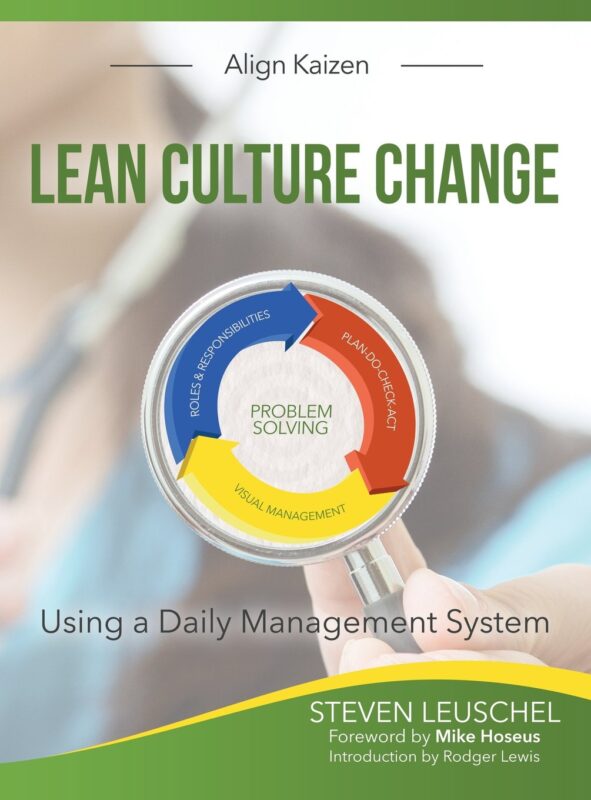
Lean Culture Change: Using a Daily Management System
Lean Culture Change, Reveals Phase 1 Level A of The Transformation Curve
Steven Leuschel, Lean healthcare practitioner pens book, Lean Culture Change Using a Daily Management System. This new book reveals decades of organizational transformation knowledge deeply rooted in the Toyota Production System and Toyota’s culture.
Lean Culture Change is based on the teachings of Rodger B. Lewis, former General Manager of Quality at Toyota during the Georgetown ramp up. Lewis via the Transformation Curve has successfully transformed divisions of General Motors and organizations around the globe for decades. Now, it’s time that healthcare organizations begin to learn a long-term strategic approach to transformation— not just becoming Lean, doing kaizen events, or creating a model cell. In Lean Culture Change, Leuschel describes the initial steps of the Transformation Curve’s Phase 1 Level A with real-life healthcare examples and case studies.
Lean Culture Change is designed to be a training manual for team leaders and Senior Leaders who wish to study and adapt the Transformation Curve. It contains over 200 pages, 100 images/examples, and 6 case studies, an Afterword and Post Script.
More info →